Exodus - Released June 3, 1977
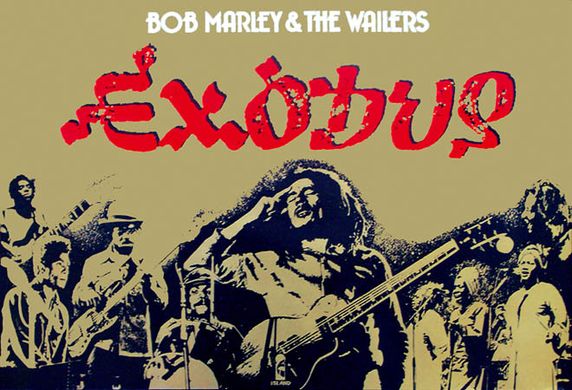
In 1999, Time magazine named Exodus the Album of the Century. Not the greatest reggae album. Not the greatest album of the 1970s. The greatest album of the entire twentieth century. It is a bold claim — but spend an hour with this record, and you begin to understand why so many people find it impossible to argue with.
The Album Born From A Bullet
To understand Exodus, you have to understand what came before it. On December 3, 1976, two days before Bob Marley was due to headline the Smile Jamaica concert — a free event organised to ease political tensions in Kingston — gunmen entered his home at 56 Hope Road and opened fire. Bob was shot in the chest and arm. His wife Rita was shot in the head. His manager Don Taylor was shot five times.
Bob performed at the concert anyway, two days later, lifting his shirt to show the crowd his bandaged wound. Then, shaken and aware that his life was genuinely in danger, he left Jamaica. He would not return for over a year.
He flew to London, settled into a house in Chelsea, and began writing. What came out of those months — the anger, the spiritual resolve, the longing for home, the declaration of movement and freedom — became Exodus. The album is not just a collection of songs. It is a document of a man who stared at his own mortality and responded with his greatest work.
Two Albums In One
Exodus is a record of two distinct halves, and understanding that structure is key to understanding its genius.
Side One — the first half — is raw, political, and urgent. Natural Mystic opens the album like a weather forecast for everything that follows: something heavy is coming, something spiritual, something that cannot be stopped. Then comes So Much Things to Say, a fierce defence of his legacy and a rebuke of those who would reduce him to a symbol. Guiltiness, The Heathen, and Exodus itself follow — each one a declaration of resistance, of movement, of the refusal to be defeated.
Side Two is almost a different record entirely. It breathes. Waiting in Vain is one of the most tender love songs Bob Marley ever wrote. Turn Your Lights Down Low glows with warmth. Three Little Birds — perhaps the most universally beloved reggae song ever recorded — arrives like a gentle hand on the shoulder. And One Love, which closes the album, transforms the pain of Side One into something open, generous, and communal.
This movement — from fury and exile to love and unity — is not accidental. It is the emotional architecture of a man working through something enormous in real time, and inviting the world to follow him through it.
The Recording: London, 1977
Exodus was recorded at Island Records' Basing Street Studios in London between January and April 1977. The Wailers — at this point the I Threes (Rita Marley, Judy Mowatt, and Marcia Griffiths) alongside the core band — were at the peak of their powers. The rhythm section of Carlton and Aston Barrett gave the album its unmistakable pulse: deep, patient, and utterly locked in.
Producer Chris Blackwell and engineer Karl Pitterson worked with Bob to give Exodus a sonic richness that set it apart from earlier records. There is a warmth to the production — the bass sits wide in the mix, the vocals are layered with care, the horns arrive at exactly the right moments. It sounds expensive and homemade at the same time. It sounds timeless because it was made by people who were not thinking about trends. They were thinking about truth.
What Makes It The Greatest?
The case for Exodus as Bob Marley's definitive album rests on several things simultaneously. It is the record where his songwriting was at its most varied — he could write a righteous protest anthem and a heartbreaking love song in the same session, and both felt equally essential. It is the album where the production most perfectly matched the material — big enough to fill stadiums, intimate enough to feel personal. And it is the album that most completely captures who Bob Marley was as a human being: fierce, faithful, romantic, political, and, underneath it all, hopeful.
It spent 56 consecutive weeks on the UK charts. It reached number 20 on the Billboard 200 in the United States. In 2020, it was inducted into the Library of Congress National Recording Registry as a work of cultural and historical significance.
But statistics do not really explain why, nearly 50 years after its release, Exodus still sounds like it was made for right now. That is something else entirely. That is what it means to make a record that is truly, irreducibly alive.
A Record For Every Season
At Reggae Memories, we believe some albums are not just listened to — they are lived with. Exodus is one of those records. It has been the soundtrack to protests and to quiet Sunday mornings, to heartbreak and to celebration, to loss and to the stubborn insistence that things can be better.
If you have not heard it recently, put it on today. Start with "Natural Mystic" and let it play straight through. By the time One Love closes out, you will remember exactly why this music matters.