

Ernie Smith
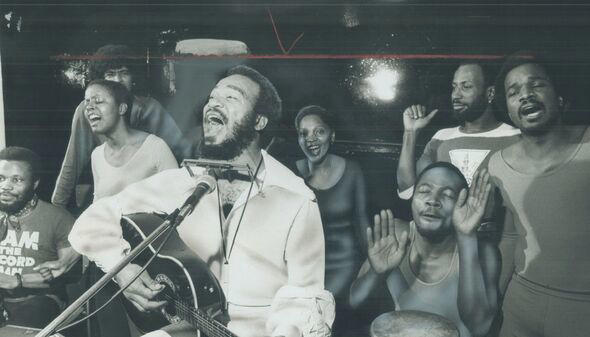
The velvet voice Jamaica will never forget. His deep, velvet baritone simply settled into the soul and stayed there.
While the world knew Bob Marley's defiance and Burning Spear's fire, Jamaica had another kind of genius a man who could make you feel the warmth of the island in a single note. Ernie Smith did not shout. He did not need to. His deep, velvet baritone simply settled into the soul, and stayed there. On April 16, 2026, ten days before what would have been his 81st birthday, that voice fell silent. Jamaica, and the reggae world, lost one of its most quietly extraordinary storytellers.
A Name Bigger Than the Man Who Carried It
He was born Glenroy Anthony Michael Archangelo Smith in Kingston, Jamaica, on May 1, 1945 a name so grand it could have belonged to a king. Raised in St. Ann and May Pen, he was the son of a father who played guitar and who, when his boy was just twelve years old, placed an instrument in his hands and changed the direction of his life.
As a teenager he played with a local band called The Vandals in Claremont, St. Ann. It was there he earned his nickname — Ernie — given to him in admiration of the great Jamaican jazz guitarist Ernest Ranglin. For a young musician to be named after Ernest Ranglin was not a small thing. It was a signal that people heard something in him.
His first attempt at a music career was not through singing at all. He walked into Federal Studios looking for work as a songwriter. The studio heard his demos and suggested something else entirely: record them yourself. That accidental beginning led to one of the most distinctive catalogues in the history of Jamaican popular music.
The Sound That Stood Apart
By the late 1960s, Jamaican music was being defined by the urgency of rocksteady giving way to — music that was political, spiritual, and sometimes militant. Ernie Smith went his own way. His sound was warm, easy, and deeply human. He wrote about everyday Jamaican life — its humour, its heartbreak, its small beautiful moments — and he delivered those songs in a baritone so rich it seemed to carry the weight of the whole island.
His early hits Bend Down and Ride on Sammy arrived in the late 1960s and established his name on the Jamaican charts. Pitta Patta followed — a song so perfectly observed, so playful and warm, that it became the kind of record Jamaicans passed down through families like a treasured possession. Then came Duppy Gunman and Key Card, cementing him as one of the island's most beloved voices.
His songs reflected life as it was lived — simple yet complex, humorous yet deeply observant — resonating across generations in Jamaica and throughout the Caribbean diaspora.
The Song That Conquered Japan — and the World
The defining moment of Ernie Smith's career came in 1972, in the most unlikely of places: Tokyo, Japan. He entered the prestigious Yamaha Music Festival with a song called Life Is Just For Living — a song he had originally written as a jingle for Red Stripe beer. It won. In front of an international audience, at a competition featuring artists from across the globe, a Jamaican man with a guitar and an unshakeable sense of melody walked away with the top prize.
It was one of the earliest international victories for Jamaican popular music outside of the reggae genre, and it sent a message — that the island's musical gift was not confined to one sound or one style. It was a deeper thing than that. It was a way of feeling the world.
The following year, 1973, the Jamaican government awarded him the Badge of Honour for Meritorious Service in the Field of Music. In 2006, he received the Order of Distinction.
His songwriting talent reached further than most people realised. A composition he wrote called I Can't Take It was recorded by American artist Johnny Nash under the title Tears on My Pillow — and in 1975, it reached number one on the UK Singles Chart. Smith initially missed out on royalties due to a confusion over the title. That a Jamaican songwriter's pen was behind a British number one was the kind of story that deserved far more recognition than it ever received.
The Hard Years and the Return
Fame did not come without its struggles. In 1981, Ernie Smith moved to Miami to be closer to his family. The years that followed were difficult — financial pressures mounted, and he battled personal challenges that nearly derailed everything he had built. It was a chapter he spoke about honestly in later years, and it was in those difficult years that an unexpected hand was extended to him: that of Cedella Booker, Bob Marley's mother, with whom he collaborated as a songwriter. That connection — two generations of Jamaican music, united in a quiet act of creative support — is one of the more remarkable footnotes in the island's musical history.
He came back. By the late 1980s and through the 1990s, Ernie Smith was performing and recording again. He returned to Jamaica after Hurricane Gilbert, reconnected with his audience, and continued making music into the 2000s. His 2008 album Country Mile showed that the voice, and the gift for a melody that stayed with you, had not gone anywhere.
What Jamaica Said When He Was Gone
When news of his passing on April 16, 2026 broke, the tributes came from the highest levels of Jamaican public life. Prime Minister Andrew Holness described his voice and storytelling as unmistakable and central to Jamaica's musical identity. Culture Minister Olivia Grange said his voice would resound in hearts and memories forever. Opposition Leader Mark Golding praised his sweet melodies and profound lyrics as part of the fabric of the nation.
These are the words governments use for national treasures. And that is precisely what Ernie Smith was — not a global superstar in the way that Bob Marley became, but something equally important: the voice that told Jamaica its own story back to itself. The singer who made ordinary Jamaican life feel worth celebrating. The man who wrote a beer commercial and turned it into a song that won an international competition and outlived everyone who heard it the first time.
A Voice That Deserves to Be Remembered
At Reggae Memories, this is exactly the kind of artist we exist to honour. Not every legend carries the name recognition of Bob Marley or the international profile of Burning Spear — but the music Ernie Smith made was no less essential, no less real, and no less worthy of your time.
If you have never heard Pitta Patta, hear it today. If you have not played Life Is Just For Living in years, play it now. And if you are discovering Ernie Smith for the first time through this post — welcome. You are in for something very special.
He was 80 years old. He would have turned 81 on May 1. He spent those eight decades giving Jamaica — and anyone who would listen — a soundtrack for the good life.
Ernie Smith sang about the everyday — and in doing so, he made the everyday extraordinary. Which of his songs means the most to you? And do you think Jamaica's easy-listening artists like Ernie Smith have been unfairly overshadowed by the global roots reggae movement — or did they always get the recognition they deserved? Share your memories and your thoughts in the comments below.